Let Women Remain Silent (or Not)

Women Should Remain Silent (?)Last week in class we discussed 1 Corinthians 14.33-35. Talk about a controversial text. How does one properly interpret such a passage?  I was asked by a number of friends if I might post my notes on this. Instead of posting notes, here are “points to ponder” in working toward a proper interpretation of this passage. Perhaps I should mention at the beginning that I did not bring up the typical explanation of this being a house church wherein the women and men sat in different areas (a much later practice nowhere testified to in the NT) and thus the women would be somehow disruptive by asking their husbands something from across the room. Such a maneuver requires a historical reconstruction of which (at best) is shaky. So I offer the following after the verses in question:

 For God is not a God of disorder but of peace—as in all the congregations of the Lord’s people.
34 Women should remain silent in the churches. They are not allowed to speak, but must be in submission, as the law says. 35 If they want to inquire about something, they should ask their own husbands at home; for it is disgraceful for a woman to speak in the church. (NIV2011)

Points to ponder:
* The paragraph break for the end of verse 33 in various translations alters the reading with relation to the universal sense? Is God about peace and order “in all the churches of the saints” or are women to remain silent “as in all the churches of the saints”? (See my comments on the translations HERE). The former is followed in the such translations as the ESV and NIV84, the latter in the footnote of NIV84 and the NLT. The grammar is ambiguous. The theology, points to the latter as the more likely referent.
* “Woman” in verse 34 is clarified by speaking to ‘her husband’ in verse 35. How would this apply to single women? Does it only immediately then apply to married women?
* Women were already told they could “prophesy and pray” in 1 Cor.11.6 as long as they do so with propriety. How then should we understand not being allowed to “speak” in 1 Cor.14.34? It would not be a total speaking censure.
* this passage is framed before and after by discussions of prophesying and its proper regulation for orderliness. Has this passage shifted contexts or is it actually still regulating prophecy in the church to function in an orderly manner? How so?
* To “ask her husband” is grammatically suggestive (following the extensive lexical and semantic analysis of Waldemar Kowalski’s paper at SPS 2013 in Seattle, WA) of a critiquing and (likely) rejection. If this is actually about prophesying it would point to a husband prophesying and his wife questioning it (or him) in a negative way. While the others are already instructed to weigh what is said, if the wife of the one prophesying were to do so in the corporate worship setting it would lack propriety. She should therefore save such a questioning for the privacy of their home.
So where might this leave us for interpretation? How do you read this? Do these talking “points” help you to better understand some of the issues involved?
________________________
* It is also of note that Gordon Fee (in his NICNT commentary on 1 Corinthians) points out that some of the manuscript evidence places this text (vv.34-35) to after the chapter. His proposal (which I personally find weak, but mention because…well…its Fee) is that this text is not original to 1 Corinthians.

Posted in 1 Corinthians, Hermeneutics, Theology, translation | Tagged , , , | 11 Comments

Bonhoeffer on the Reformation

Today’s reblog (from a post now four years old) is brought to you by Reformation Day!

Posted in Dietrich Bonhoeffer, Reformation | Tagged , | Leave a comment

Wrestling with Unicorns

unicorn

You read that right. Yesterday I wrestled with unicorns…all afternoon. And not just your run of the mill mythic Greek unicorns. No. I wrestled with the Biblical variety. In case you have no clue what I’m talking about, you might be surprised to find that “unicorns” are mentioned in the Bible (or at least in the King James Version of the Bible). [1]
Here are the passages where “unicorn/s” are referred to: Numbers 23:22; 24:8; Deuteronomy 33:17; Job 39:9; Psalm 22:21; 29:6; 92:10; and Isaiah 34:7. This is quite a list. I know I was surprised by it.
Perhaps you are actually wondering why I would be concerned about “unicorns” (the Hebrew is  רְאֵ֖ם or r’m) in the Bible and spend my afternoon studying them? Well, as it turns out, I have a friend who is a professor in Canada who emailed me an extended question on the topic, because someone had asked him about it. Here is part of his question (where he is citing the person who brought it to him):

“Psalm 92:10 is very clearly saying that this animal has one horn, while Deut. 33:17 is clearly saying that this animal has two horns. Therefore, whatever the r’em is, it must be an animal that could have either one or two horns.”
As such, this individual believes that the “wild ox” translation of most of our modern versions is actually misleading and inaccurate and we should be sticking with the LXX  (KJV) rendering of rhinoceros/unicorn.

Unicorn on the Black Obelisk

And here is my reply:

Technically Psalm 92.10 (or more specifically the MT 92.11) only refers to “the horn” of the r’m. This does not require it to have only one horn, but only notes “the horn” of this creature as if to specify a type rather than delineate the number of horns this creature has normally. For instance, I could refer to something being “like the tusk of the elephant” but this does not mean that elephants only normally have one tusk, but I would be referring to the general category, or exemplar of just one of the tusks of the elephant. I could be wrong and perhaps the plural form for “horns” in Deut.33.17 is intended to refer to multiple horns or to the significance of the horn of this creature, but it seems more likely in that case to actually be referring to multiple horns on the single r’m.
On the NIDOTTE [2], it doesn’t have ANY mention of this term as a synonym or anything. Too bad really. And the TWOT doesn’t have anything besides “wild ox”. 🙁
The Black Obelisk [3] also contains images of monkeys (?) and elephants (on another side of it). These are the only two of the four sides depicted in ANEP. However, on yet another side there are what appear to be some sort of an ox and a buffalo and in their middle is a one-horned ox-like creature also being brought as tribute to Shalmaneser (this is a photo from the British Museum: http://www.flickr.com/photos/fuzitalondon/320861479/). So PERHAPS it is a reference to a one-horned creature, but there does not appear to be anything requiring such. Not sure what to think about it. If only there were actually a depiction with a cognate term used so that potentially one might know what is being referred to precisely.
The cognate occurs in Ugaritic r’m : rum “buffalo” UT 49:VI:18, plural rumm (UT 51:I:44; 62:19; 2 Aqhat VI:21 [where his “sinews” are considered “splendid”). For more contemporary citation references: 4.i.44 (in the land of Ym’an there are 10 thousands of them); 5.i.17 (captivated by a pool of water much like the appetite of lions in the wasteland, or the desire of dolphins with the sea and hinds with springs of water), 6.vi.18 (the brutality of the battle between Mot and Baal is compared to the goring of this creature) in Gibson who provides the gloss “wild ox”. [4]
Interestingly enough EVERY occurrence in the Hebrew Bible is in a poetic statement. Not sure what that might mean, but it is interesting nevertheless.
My likeliest explanation for “unicorn” is it derives from the Vulgate [5] which translated the LXX which started with “one-horned”. Not sure where the LXX derives this from, other than potentially their own understanding of the Psalm passage about the singular “horn” of this creature. Granted (as is witnessed on the Obelisk) there is some sort of creature known to the ANE which had a single horn (or so it appears as such), but this does not necessitate the same creature for the Hebrew r’m.

So that is the gist of my wrestling with unicorns in the Bible. However, the story isn’t quite complete, because when I arrived home my oldest daughter (Abbi, 11) showed me a video that her sixth grade class had made which was based on the topic they had been discussing yesterday…which just happened to have been “unicorns”. 🙂 Coincidence…you be the judge. 🙂
__________________________________
[1] Wild ox or buffalo seems to be the preferred translation in many other versions.
[2] He had asked about the New International Dictionary of Old Testament Theology and Exegesis (5 vols; Zondervan, 1997). I also looked at the Theological Wordbook of the Old Testament ()2 vols.; Moody, 1980) which is why I mention it next.
[3] In one of the commentaries he had consulted there was mention made that the Black Obelisk had a picture of a one-horned creature along with other livestock, but sadly that particular side of the Obelisk is not pictured in James Pritchard’s The Ancient Near East: An Anthology of Texts and Pictures (2 vols.; Princeton, 1971). So I included a link to it as photographed in the British Museum.
[4] UT refers to Cyrus Gordon’s Ugaritic Textbook: Grammar, Texts in Transliteration, Cuneiform Selections, Glossary, Indices (Analecta Orientalia 38, Pontificium Institutum Biblicum, 1965). The Gibson text I refer to is Canaanite Myths and Legends (2nd Edition; New York: T&T Clark, 2004). While I did not mention it in my response, one also finds a cognate in the Aramaic and, yet earlier, Assyrian rimu.
[5] The Latin Vulgate translates with the English equivalents of “unicorn” and “rhinoceros”. This appears to be following the Greek Septuagintal translations (LXX).

Posted in humor, Old Testament | Tagged , , , , , | 29 Comments

Eating Your Theology (Gen.6-9)

image
In Sunday School this week we covered the account of Noah in Genesis 6-9. And I was struck once again by the contrast between the ancient Near Eastern (ANE) accounts that parallel the Biblical Deluge/Noah account.
In the ANE accounts the gods destroy mankind with a flood because of their “noise”* which the gods find bothersome, there is one who escapes the deluge and once they have committed this atrocity they are upset that there are no humans left to feed them. Alas, there is one who survives (Utnapishtim) by use of an ark and upon his exiting the ark he offers a sacrifice. The gods “gathered like flies” to the feast and consider themselves fortunate that a human survived to feed and serve them.
The Bible, on the other hand, declares that God, that is Yahweh, intentionally preserves humankind via righteous Noah. This God even provides specifically for the food for Noah on the ark. Once the ark is opened and Noah exits, he offers a sacrifice to the LORD who is pleased by this. Noah and his descendants are themselves given food to eat by the LORD.
“Everything that lives and moves about will be food for you. Just as I gave you the green plants, I now give you everything.” (Gen.9:3 NIV2011)
This is the God we serve…not a capricious god, but the LORD who preserves and provides for His creation.
___________
* To be fair, it is possible the ‘noise’ of humans in these ANE accounts actually parallel the biblical account of the LORD noting the din of human violence and depravity.

Posted in Flood, Genesis, Theology | Tagged , , | Leave a comment

Eating Your Theology (Gen.1)

AtrahasisIn Sunday School this week we covered Genesis 1. Something that struck me was verses 29-30:

Then God said, “I give you every seed-bearing plant on the face of the whole earth and every tree that has fruit with seed in it. They will be yours for food.
And to all the beasts of the earth and all the birds of the air and all the creatures that move on the ground–everything that has the breath of life in it–I give every green plant for food.” And it was so. (Gen 1:29-30 NIV)

Whereas some have taken this as some sort of Pre-fall diet plan to get healthy (it isn’t), I realized it is making a VERY significant claim theologically. In the ancient Near Eastern stories of the creation of humans (see Atrahasis Epic), people were made to feed the gods. They did feed themselves, but only as they would “sustain the gods”. And the gods (Igigi) were said to toil hard at making food and led (by their rebellion under the toil) to the creation of humans.
In the Genesis 1, however, it is the God of Israel who feeds people and creatures alike. There is not even a mention of God eating (to be fair God is described as eating later in the canon). Now THAT is a theological claim we should not miss. This God, the god of Israel, is the one who feeds all of creation and has created in order to care for creation. And the work was not toilsome to begin with, but simply attending to the garden of God (Gen.2-3). And it was God Himself who watered the dwelling of humans and gave them freely to eat. This is the God of Israel. This is the God of the Church.
Now that’ll preach!

Posted in Ancient Near East, Biblical Studies, Genesis | Tagged , , , , , , | 1 Comment

How NOT to Interpret the OT Law

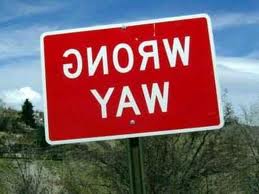
WrongThe Resurgence has posted The Beginner’s Guide to Interpreting Old Testament Law and offered the commonly received Reformed categorization of the Torah as ceremonial, civil and moral. The problem is that this is an external distinction not found in the text of Scripture itself. And while it may be helpful as a basic categorization to separate what is still “in force” for the Church, it offers a system that creates its own problems which are foreign to the Torah itself.
On the other side, J. Daniel Hays (“Applying the Old Testament Law Today” Bibliotheca Sacra 158 [Jan-Mar 2001]: 21-35) wrote a terrific treatment on the topic where he discusses why such categories are not as helpful as many have been led to believe. Here are his concluding remarks:

The traditional approach of dividing the Mosaic Law into civil, ceremonial, and moral laws violates proper hermeneutical method, for it is inconsistent and arbitrary, and the Old Testament gives no hint of such distinctions. This approach errs in two ways. On the one hand it dismisses the civil and ceremonial laws as inapplicable. On the other hand it applies the so-called moral laws as direct law. In addition the traditional approach tends to ignore the narrative context and the covenant context of the Old Testament legal material.
Principlism, an alternative approach, seeks to find universal principles in the Old Testament legal material and to apply these principles to believers today. This approach is more consistent than the traditional one, and it is more reflective of sound hermeneutical method. It also allows believers to see that all Scripture is “useful for teaching, rebuking, correcting and training in righteousness” (2 Tim. 3:16).

Joseph Kelly blogged about this last year in relation to Rachel Held Evans “A Year of Biblical Womanhood” (and Tim Keller’s review of it) wherein he argues she likewise subscribes to the “naïvete” of such distinctions in the Law. He notes that mainstream Biblical scholarship has largely moved from such distinctions (even though I note it has had little effect on the wider churches’ understanding and application of the Torah).

Posted in Interpretation, Law | Tagged , , , , , , | 4 Comments

Talking Smack: The Bible Way

SmackLuke Geraty just blogged about “talking smack” in video games, which brought to my mind some of the “Biblical” smack-talk that I have found humorous over the years. Here is a small sampling:

  • Philistine smack talk: “Come on,” said the Philistine. “I’ll make roadkill of you for the buzzards. I’ll turn you into a tasty morsel for the field mice.” (1 Sam.17:44 TM)
  • Boy smack talk: “What’s up, old baldhead! Out of our way, skinhead!” (2 Kings 2:23 TM)
  • Lamech smack talk: “If someone who kills Cain is punished seven times, then the one who kills me will be punished seventy-seven times!” (Gen. 4:24 NLT)
  • Jezebel smack talk: “So may the gods do to me and more also, if I do not make your life as the life of one of them by this time tomorrow.” (1 Kings 19:2 ESV)

I find this last one humorous because she acts like her gods can do anything…when THEY were just proven to be nothing on Mt. Carmel…and now she invokes them. What Bible smack talk have you found to be humorous?
 

Posted in humor | Tagged , , , , , , | 3 Comments

Do We Really Need the Old Testament?


As someone who serves as an Instructor in Old Testament at one college (Providence University College and Theological Seminary) and an Assistant Professor whose primary focus is in Old Testament at another college (Trinity Bible College), this question has significant concern for me.
Yet, more significantly this question is of paramount concern for me as one who professes faith in Christ…that is, it is a thoroughly Christian question that must be answered in the affirmative. What do you think about John Oswalt’s “Seven Minute Seminary” answer to this question?
Recommended Reading
Seitz, Christopher R., The Character of Christian Scripture: The Significance of a Two-Testament Bible (Studies in Theological Interpretation; Grand Rapids, MI: Baker Academic, 2011).

Posted in Old Testament, Providence Theological Seminary, Trinity Bible College | Tagged , , | 5 Comments

Asking for Blessing or Giving Thanks?

English: Hostess Twinkies. Yellow snack cake w...

English: Hostess Twinkies. Yellow snack cake with cream filling. (Photo credit: Wikipedia)

In a recent conversation, I noted a particular question that was posed about “blessing the food” when we gather to eat. Here are my reflections: We do not ask for the food to be blessed, per se, but we bless the Lord and we give thanks for the food.

  • “We do not ask for the food to be blessed, per se,…” – What I mean by this is that the “food” does not need “blessed” (I’m never quite sure what that is supposed to really mean in many of our contexts). I have been witness to prayers offered for God to bless by making nutritional what was self-confessed by the one praying as not nutritional (think Twinkies). The food that we eat is our choice and responsibility. If we should not consume it because of health issues then simply don’t consume it. However, we do well to not ask for some “blessing” for what we already know to not be blessed by the Lord. However, if it may be “consecrated” (another factor in being “blessed”) then we do well to do so in faith. Whatever we eat or drink must be done in faith. If we can do such, then we may “consecrate” (or “bless”) the food given by the Father for our enjoyment and His good pleasure (cf. Matthew 26:26; 1 Cor.10:16).
  • “…but we bless the Lord…” – If any blessing is to be requested and/or given, it is a blessing of the Lord for His grace and mercy in provision. We do well to bless the Maker of heaven and earth. We do well to bless the Father of Lights who knows how to give good and perfect gifts (Matthew 7:11; James 1:17) to those who ask Him.
  • “…and we give thanks for the food.” – In everything we give thanks, because we recognize ourselves to be the undeserving children of God.  Let us give thanks as our Lord Jesus gave thanks in sharing the supper with his disciples (Luke 24:30).

ברוך אתה ה’ א‑לוהינו מלך העולם, המוציא לחם מן הארץ.‏
“Blessed are You, LORD, our God, King of the universe, Who brings forth bread from the earth.”
Let it be said by God’s people: “You shall eat your fill and bless the LORD your God for the good land that he has given you.” (Deut.8:10 – NRSV)Berakot
 

Posted in Prayer | Tagged , , , , , , , , , | Leave a comment

A Day To Celebrate?

PicnicToday was my final worship service with the congregation I have loved and served for the last decade. And it was exactly the kind of day I wanted to share with my church family: our annual church at the lake.
We sang together, heard testimonies of healings, shared communion (although I accidentally forgot the grape juice at home, so we just used grapes instead 🙂 ), swam, played games, feasted, prayed over each other, and just enjoyed being together. This is the life of the church. Not simply “weekly worship services”, but where the community of believers share life together around the table of communion and celebrate our Great God and Savior who is Himself perfect fellowship: Father, Son and Holy Spirit.
I love my church family in Karlstad. I love my community.  This is the way I want to remember our life together. Enjoying each other. Laughing and crying. Playing baseball and praying in the Spirit. Singing God’s praises and soaking each other with water balloons (thrown in love, of course). Visiting around the tables filled with food. Celebrating with the cup (or at least grapes) and the bread of remembrance.
This is a day that will be emblazoned on my mind. A day stored in the treasury of my heart. A day for future reflection. A day to celebrate God’s grace and mercy and a family that is bound to one another as the very body of Christ himself.
This is the conclusion of a decade of ministry: life shared with both seasoned saints and the newly regenerated. Sharing life with those who have been in the Faith for nearly 70 years…and others whom I led through the waters of baptism only a few years ago. Children and parents whom I’ve led to Jesus feet. A widow whom I have visited regularly in her sorrows and consolations. Families I have worked to see restored to wholeness. Young adults I’ve watched mature and helped to grow in the Faith in the midst of their many struggles and questions.
It was a day to remember. A day to celebrate…in sorrow for the distance that will separate us…in joy for the things which God has done and will yet do.
Thank you Lord for my many days in Karlstad!

Posted in Church, pastoral | Tagged , , , , , , , , , | Leave a comment