The Bookshelf Challenge

2014-01-02 15.27.07

So here it is. I’m doing a “bookshelf challenge” for 2014. This means I will be doing a weekly photo update blog post where I intend to BRIEFLY comment on the books I’ve finished reading that week and including the updated photo of the bookshelf. I’ve only got three empty shelves to begin with (hopefully that suffices, but the one above can be used in a pinch 😉 ).

To my wife’s delight it will not be filled by simply buying more books, but by reading some that I already own that I haven’t read yet (not to say it won’t include newly purchased volumes…which it will 🙂 ). Happy reading all!

Posted in Books, bookshelf challenge | Tagged , | Leave a comment

I'm Getting a Tattoo

Mike TysonYes, you read that correctly. I am getting a tattoo. And, yes, I am still a pastor and Bible college faculty member. And I am not just getting any tattoo. The kind you are probably thinking that I am getting is so cliché…so 2013.
And my tattoo will not be something covered by sleeves or pant legs. We are talking about one for my face so everyone can see it. And Mike Tyson has nothing on what I’m getting.
And don’t bother trying to talk me out of it. This is a done deal. I’ve made up my mind and I’m sticking to it no matter what.
Just to be clear, I’m getting a tattoo that no one can replicate. I’m getting a tattoo that never needs upgrading and is the ultimate tattoo of tattoos. I am getting a tattoo that sets me apart from the world. And I hope (and pray) you are getting one as well:

“All who are victorious will become pillars in the Temple of my God, and they will never have to leave it. And I will write on them the name of my God, and they will be citizens in the city of my God– the new Jerusalem that comes down from heaven from my God. And I will also write on them my new name.”
“Then I saw the Lamb standing on Mount Zion, and with him were 144,000 who had his name and his Father’s name written on their foreheads.”
“No longer will there be a curse upon anything. For the throne of God and of the Lamb will be there, and his servants will worship him.
And they will see his face, and his name will be written on their foreheads.” (Rev 3.12; 14.1; and 22.3-4 NLT)

The one that declares, “I listen to the Spirit, and thus belong to God, because I love and worship Jesus no matter what.” Now THAT is my kind of tatt.
HAPPY NEW YEAR!

Posted in Revelation, tattoos, Theology | Tagged , , | Leave a comment

Christmas Reading

image
So I thought I’d share my Christmas break reading list:
Thesis Reading:
God the Spirit by Michael Welker
God’s Indwelling Presence by James Hamilton
The Spirit of Life by Jürgen Moltmann
Lecture Prep:
Preaching the Whole Bible as Christian Scripture by Graeme Goldsworthy
Pentecostal Commentary on 1-3 John by Chris Thomas
Fun:
A Wrinkle in Time by Madeleine L’Engle
Celebration of Discipline by Richard Foster
Augustine the Mentor by Edward Smither
So what are you reading this holiday season?

Posted in Books | Tagged | 1 Comment

The Future of Biblical Interpretation: A Book Review

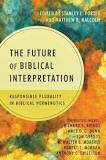
Future of Biblical InterpretationThanks to IVP Academic for providing a review copy of Porter, Stanley E. and Matthew R. Malcolm, eds., The Future of Biblical Interpretation: Responsible Plurality in Biblical Hermeneutics (Downers Grove, IL: IVP Academic, 2013), 176pp.
I offer the following review of this volume:

The Bible encompasses a plurality of voices, not only in genre but in perspective. And not surprisingly, interpreters of the Bible have generated a plurality of interpretations. How might biblical scholars work responsibly with and within this plurality? And what are the future directions or possibilities for biblical hermeneutics?
The essays in The Future of Biblical Interpretation originated in a conference held in honor of Anthony C. Thiselton, who is well known for his important work in hermeneutics and New Testament interpretation. After an opening essay by Thiselton on “The Future of Biblical Interpretation and Responsible Plurality in Hermeneutics,” the contributors look at the issues from a variety of angles—theological, scriptural, kerygmatic, historical, critical, ecclesial and relational. The result is an engaging conversation exploring responsible and productive interpretation of the Bible. A must-read for anyone seriously engaged in biblical scholarship today. [the preceding is from IVP Academic, see their press release: HERE]
CONTENTS:
Introduction
Stanley E. Porter and Matthew R. Malcolm
1. The Future of Biblical Interpretation and Responsible Plurality in Hermeneutics
Anthony C. Thiselton
2. Biblical Hermeneutics and Theological Responsibility
Stanley E. Porter
3. Biblical Hermeneutics and Scriptural Responsibility
Richard S. Briggs
4. Biblical Hermeneutics and Kerygmatic Responsibility
Matthew R. Malcolm
5. Biblical Hermeneutics and Historical Responsibility
James D. G. Dunn
6. Biblical Hermeneutics and Critical Responsibility
Robert C. Morgan
7. Biblical Hermeneutics and Relational Responsibility
Tom Greggs
8. Biblical Hermeneutics and Ecclesial Responsibility
R. Walter L. Moberly
Conclusion
Stanley E. Porter and Matthew R. Malcolm

Porter and Malcolm are to be commended for this very fine (and brief) volume. The contributors are all well-regarded in their own rights and many of the contributions offer helpful proposals for responsibility in Biblical interpretation. Essentially this volume proposes a sort of responsible “concordant polyphony” of interpretation (p.10). How these divergent voices are to be held in a sort of harmonic tension is another issue (as the editors note in their conclusion). The variant voices offered here tend toward a plurality of approaches to interpretation rather than simply a plurality of interpretations.
Chiefest of the contributions, from my perspective, were Anthony Thiselton’s open-ended suggestions for the future of Biblical interpretation and Richard Briggs’ Scriptural responsibility. Thiselton astutely notes that one cannot know the direction of Biblical interpretation despite seeing the directions it has taken and is taking. He thus refers to “future possibilities” rather than “future directions” (p.24). His “possibilities” are worth mentioning: (1) a genuine confluence between general hermeneutics and actual exegesis of Scripture, (2) the call to engage the text of Scripture as “Other” rather than simply self-reflection, (3) an equal weighting of the voices of Scripture, (4) a move beyond the greatest extremes of interpretive theory, (5) continued appropriation and development of Speech-Act Theory, and (6) a proper use of literary theories in hearing the voice/s of Scripture.
Briggs’ chapter proposes “four specific theological construals of Scripture that might productively frame Christian wrestling with hermeneutical plurality: two testaments, in a creative set of theological tensions, as a means of grace, and held together dialogically as the communicative acts of the one God who is the God of Abraham, Isaac and Jacob, and also the God of our Lord Jesus Christ” (p.69). This is his manner of proposing a Christian reading of the Scriptures we hold by faith and confession. He argues it is not a responsible reading that thinks one should read apart from their commitment of faith to God in Christ as confessed by all the Church everywhere. This is, to my thinking, imperative for Christian interpreters of Scripture. Walter Moberly seems to offer a similar stream of thought within the framework of “canon”. His contribution might equally offer a helpful aim for understanding responsible Christian interpretation of the texts gathered and affirmed as authoritative for and by the Church.
Along a similar trajectory is Malcolm’s contribution. He argues for a “primed” and “faithful” interpreter (pp.81-84). This is understood to be an interpreter who holds the public confession of Christ as Lord as central to responsible interpretation of Scripture. Tom Greggs (Relational Responsibility), more specifically, speaks to a Protestant hearing of Sola Scriptura grounded in his understanding of the ecumenical creeds of the early centuries.
Less helpful contributions by James Dunn (historical responsibility) and Stanley Porter (theological responsibility) are also worth mentioning. (My appraisal of their work may be tangential to my own perspective on other related issues). Dunn offers a fine reminder of the situatedness of the Biblical texts (or any text for that matter) as well as of the interpreter. This is a necessary reminder. He does, however, seem to offer essentially his own (once again) offering of a re-reading of Paul in the strain of the “new perspective”. In this sense, I find him helpful and unhelpful. His methodology being helpful, his conclusions less than. Robert Morgan (Critical Responsibility), likewise, argues from a more thorough-going historical-critical perspective from within his own understanding of a NT theological perspective particularly with regard to the descriptions of the Jesus of history and Christ of faith.
The reason I do not find Porter’s chapter to be as helpful as others might be his (seemingly) over negative appraisal of theological interpretation in its contemporary trending. He argues for a “Biblical hermeneutic” against simply a “Biblical interpretation”. The former referring to the broader notions of theory and the latter to specific approaches to the text (or at least that is how I understand his approach). Hermeneutics is broad (entailing the interpreter as well), while interpretation is supposedly narrow and involves “processes and techniques” (p.31). I appreciate his attempts to delineate the two, but perhaps this is nuancing in ways others here have not and might themselves find unfruitful. Following his trajectory, he proposes a theological hermeneutic against a theological interpretation. Again, I find certain aspects of his approach to be helpful, while also seeming to be overly critical apart from a genuine appraisal of specifics. [Perhaps what is really needed is my own further interaction with other writings of Porter to better grapple with his approach]
Perhaps one of the most poignant comments for many of those who might make use of a volume like this was Walter Moberly’s personal narrative interwoven within his discussion of Ecclesial Responsibility:

“the way the Bible is taught in divinity schools and seminaries in the US…[is] not fit for [the ecclesial purpose of producing] future leaders of churches who will spend much time reading and interpreting Biblical texts, can finish their studies and still be relatively clueless about how to handle these texts well in the situations in which they find themselves” (p.134, referring to the comparable appraisal of Dale B. Martin, Pedagogy of the Bible: An Analysis and Proposal [Louisville and London: Westminster John Knox, 2008]).

That is a danger, all too real, that it would be hoped The Future of Biblical Interpretation might aid in remedying in part by at least raising the imperative questions of (as the subtitle claims) responsible plurality in Biblical hermeneutics. This is a welcome volume that should be incorporated into hermeneutic reading requirements for graduate level courses in Biblical hermeneutics and it is a fine praise to the tremendous contributions of the scholarship of Anthony Thiselton.
_____________
See what other reviewers have to say:
Nate Claiborne
Jim West (forthcoming)

Posted in Book Review, Hermeneutics, Interpretation | Tagged , , , , , , , , , , , , , | 1 Comment

Daniel Block on Inductive Study

Daniel Block offers some basic (but essential) advice to students of Scripture to study the text as primary, rather than turning to other sources first.

“When you are wrestling with biblical texts, wrestle with the texts.”

(see more at Koinonia).

Posted in Daniel Block, Hermeneutics, Interpretation | Tagged , , , | Leave a comment

The Lost Treasure of Ugarit

It appears that the SYFY channel is making a movie about my life as an Ugaritic scholar. They even got my wife, Jenn, into the mix. I’m just annoyed they went with my name being “Jack Hunter”. Lame! I prefer Vladimir von Bonhoeffer if I must have a pseudonym. 🙂
Now you can all see what kind of adventures I enjoy as a scholar of dead languages. Booyah! #PhDshaveallthefun

Posted in Uncategorized | Tagged , , , | 2 Comments

Lamenting Lamentations: A Literary-Theology

lamentationsIn teaching the book of Lamentations, I was (once again) struck by the structure of this little book in its Hebrew form. It seems by its very structure to shape the Hebrew reader/hearer. Of course, any reading of the text that simply notes structural issues and not the text proper would fall short, but I’m offering here only a brief look at these structural elements as one more move toward the theology of Lamentations which seems stated by the text proper (which I bring up to clarify the theological trajectory which cannot properly be stated apart from the text).
The first two chapters have triple bicolon strophes per verse (22 verses each) with each strophe beginning with the next letter of the acrostic acrostic. Chapter 3 (66 verses) has triple bicolons where each bicolon of that strophe begins with that letter of the acrostic and is signified by a new verse number. Chapter four (22 verses) is doubled bicolons per strophe each strophe beginning with the acrostic. And chapter five (22 verses) is a dissolution of any of these patterns: no acrostic, no continuity of bicolons, irregular strophes. It makes the crescendo of the lament at chapter three begin its decline into full breaking of any sense of control by chapter five. This is signified by the heightened use of the acrostic even though the count of bicolons is identical to the first two chapters. It is a move toward greater disorder of a judged people (a sort of return to Genesis 1.2’s tohu-wabohu or being “unfilled and unfruitful”). It functions as the pottery of Jeremiah 18 that is not to the intention of the potter and must be undone from its form.
The soul of the LORD’s people are laid bare. They are undone. Can anything be made of this or is this the end of all?
Taking up the text itself, this places them right where the LORD wanted them in order to bring life from death, hope from despair, and salvation from judgment. The earth might fall into disarray, all order into disorder, but the LORD’s kingdom is established, his reign is life, his rule: restoration.
19 You, Lord, reign forever;
your throne endures from generation to generation.
20 Why do you always forget us?
Why do you forsake us so long?
21 Restore us to yourself, Lord, that we may return;
    renew our days as of old
22 unless you have utterly rejected us
and are angry with us beyond measure. (Lam.5.19-22 NIV 2011; bold for emphasis)
TERMS USED
Acrostic in the Scriptures refers to the successive 22 letters of the Hebrew alphabet beginning the first word and following in succession to the end of the alphabet.
Bicolon is a two line poetic unit.
Strophe refers to the larger thought unit of any number of smaller units (perhaps also called a “stanza”).
Tricolon is a three line poetic unit.

Posted in Hebrew Poetry, Lamentations, Literary Reading | Tagged , , , , | 1 Comment

Hebraizing Students

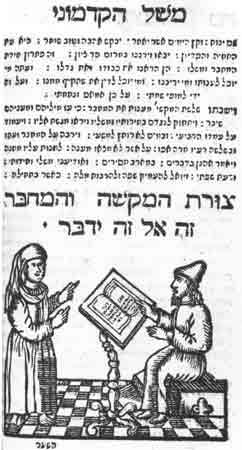
MashalThe results of my Hebraic influence on students is beginning to show as seen in the following proverb from one of them written in ancient Near Eastern fashion to me:

“There are three things that trouble me,
four that disturb:
the teacher, joyously inflicting harm,
the paper, unrelenting in difficulty,
the class hour, extending past its due,
and the student, refusing to learn.”

A proverb of wisdom indeed! And this is one of the fun things about opening up the ancient forms of our Scriptures for others to enjoy. He did ask me if this could be counted as a contemporary cognate proverb. No.
But here are a few parallel passages from Wisdom/Instruction of Amenemope (an ancient Egyptian wisdom text) and the book of Proverbs (just for fun):

ANE Parallel

Posted in Hebrew Poetry, Proverbs, Wisdom | Tagged , , , | 1 Comment

And the winner is…

Winner isThanks for entering my recent book giveaway where I was offering Andreas J. Köstenberger and Richard D. Patterson’s, Invitation to Biblical Interpretation: Exploring the Hermeneutical Triad of History, Literature, and Theology (Kregel Academic, 2011).
My own preference for a genre over the last number of years has actually become poetry. The forms of Hebrew poetry have seemed to offer a new vista for Biblical studies in my own progression and development. The manner of learning to communicate in ways where the form matches the pathos of the writing has been key in this for me.
So the winner of this drawing is…Nathan. And thanks again for everyone who entered. I plan to have more book giveaways in the not-too-distant future.

Posted in Book Giveaway | Tagged | 2 Comments

Biblical Interpretation Book Giveaway!

Invitation to Biblical InterpretationI have managed to acquire an extra copy of Andreas J. Köstenberger and Richard D. Patterson’s, Invitation to Biblical Interpretation: Exploring the Hermeneutical Triad of History, Literature, and Theology (Kregel Academic, 2011). This volume approaches the text via the historical/literary/theological method where these three aspects must be considered carefully in order to move toward a proper interpretation of Scripture. The volume’s approach begins with discussion of the canonical elements (because of the place this text has within the community which affects all else), moving to genre discussions (with analysis of specific passages), and finally discussing issues like discourse, syntax, and word studies. This is the opposite direction that a number of other texts have taken and it is (in my opinion) a more welcome approach for teaching students how to properly interpret Scripture. (The wonderful folks of Kregel Academic also offer quizzes and power-point slides for professors adopting this text).
With that said, I am going to give away 1 copy of this book to a randomly selected commenter to this post (with a maximum of four entries per person and one entry per each of the following):

  1. Leave a comment answering the question: “What is your favorite genre of Scripture and why?”
  2. Link to this giveaway on Facebook and leave a comment with a link to your FB post.
  3. Link to this giveaway on Twitter and leave a comment with a link to your Twitter post.
  4. Re-blog this giveaway linking to this post.

The giveaway will end Wednesday, November 13th at 11:59PM. The winner will be announced Thursday morning. Happy commenting. 🙂
_____________
Due to shipping costs I am only offering this giveaway to those residing in the U.S. and Canada. I will contact the winner privately to obtain a shipping address.

Posted in Biblical Studies, Book Giveaway, Hermeneutics | Tagged , , , , , , , , , | 29 Comments