
Where He Leads I'll Follow

The Winding Path - Leiden, Zuid Holland

The Winding Path – Leiden, Zuid Holland


I never cease being surprised by the many places the Lord will take those who follow his calling. One could never conceive what such a journey might look like. Following Jesus is an adventure.
As a newborn I was prayed over in the Block Memorial Chapel of Trinity Bible Institute (now College and Graduate School). I had been born just a few blocks away in the old hospital in Ellendale, North Dakota. A visiting evangelist prayed blessings over me that someday I might preach Jesus to many around the world.
As a sixteen year old, I heard the voice of Jesus calling me in a church service in Omaha, Nebraska, to give my life for the ministry of sharing Jesus among Muslims. I intended to go straight upon graduation to some far off land and figure things out en-route. Instead, I heard the words of a district youth leader in the Assemblies of God of Nebraska (who went on to serve in missions full-time) addressing the need to commit to training because the cost of serving Jesus demanded that I demonstrate faithfulness to study and be discipled  into the man of God I was called to be. So I enrolled at Trinity Bible College for their Missions Major.
After Trinity I pastored several churches in rural North Dakota and Minnesota over the course of 14 years. This was the result of hearing the call of the Lord to preach followed immediately by an unquenchable passion to do just that. I had not intended to be a preacher (or a pastor).  But Jesus had other plans.
I found myself preaching for youth conferences, family and youth camps, special services, and missions conventions around the region. And I could not help but preach Jesus wherever I found an open invitation. It has led to ministry among German Lutherans and Mennonites, Swedish Baptists, Norwegian and Romanian Pentecostals, and African diaspora on three different continents. I have preached under trees, in soup kitchens, on streets, in stone churches, and private homes. I have witnessed Jesus healing and setting free. I have shared Jesus among the poor of central Mexico and on the streets of El Salvador. I have fed the hungry, clothed the naked and visited the sick. I have joined the chorus of saints gathered from across Europe and Africa worshiping Jesus in northern Italy.
I now write as one who has been training workers for the Lord of the Harvest for 4 years in two colleges, one graduate school and one seminary (between two countries). I write this as one about to preach on “prayer and action” for a series of meetings in an African church in western North Dakota. Who could have imagined such a thing?
I write this as one who sees the great harvest before me. I am moved to weeping. I am compelled to preach. I am enjoined to prayer. I hear Jesus calling…where it takes me before he comes again, I don’t know.
But I will follow! And I gaze longingly into the future before me!

Posted in Mission of God, Prayer, preaching | Tagged , , , | Leave a comment

A Sermon No One Should Preach

David and GoliathI know it’s often easier to critique than to offer positive contributions, but I was just meditating again on the story of David and Goliath in 1 Samuel 17. And I was remembering poor sermons I have heard over the years on this favorite Sunday School story (you know it’s fun when talking veggies have their own rendition). At the time, they seemed like poignant Biblically-based messages that spoke to my life, but as a pastor now (and wanting to be faithful to the intent of Scripture) they were simply atrocious (even when offering valuable points that have little if anything to do with the text’s intent itself).

So here’s one: “You need to slay the giants in your life!” The preacher begins to name those giants: pride, lust, fear, smoking-drinking-and-chew, and going-with-girls-who-do (or something like that). It’s animated. You bring to mind all the sins you have committed and all the potential challenges you may face in life. You swing your air sling, followed by a chopping motion…and now the head of victory is in hand. It’s powerful. You are ready for any altar call given. The problem is…it just isn’t the point of this story.
Another day, another preacher: “God has given you five stones to defeat your enemies!” The stones are rattled off with exaggerated booming-voiced, staccato-like gunfire. The giants from the last message won’t stand a chance. Your stones of faith, forgiveness, prayer, reading your Bible, and going to Sunday School (or something like that) are powerful weapons in the arsenal of any David looking to be victorious over the enemies of their soul. The problem is…this also is not the point of the story.
Yet another day and another preacher (indicating the rejection by David of Saul’s armaments): “Use what has been tested and proven!”- followed by six more points every David-like leader needs to know in order to succeed (you have to have at least seven to be a truly spiritual leader after all). The litany of kingdom-wise business bullet points is overwhelming. You know you will actually need to have a couple of pens just to take all of the notes, because this message is LOADED with truthiness. Again, not the point of the story.
Is there no end to the directions this favorite tale has been taken? What is the point anyways? Put simply, the LORD (the God of Abraham, Isaac, and Jacob…the God of Israel) is lord of all. The LORD will not be mocked. The LORD is truly God. The LORD is the champion of His people. The LORD will act to deliver through those whom the LORD chooses to anoint.* This is ultimately a story about the LORD.
So the next time you preach 1 Samuel 17…make sure you know the point of the story…and don’t just start loading your slingshot with whatever you find along the way, try using what is already there. You may be surprised what the LORD will do with His own word.
___________
* I just realized I gave five points…now that should go in my pouch for future slinging. 🙂
___________
Adapted from my post authored at bluechippastor.org on July 1, 2013.

Posted in 1 Samuel, preaching | Tagged , , , , , , | 2 Comments

Prayer (Poetics of Meaning) – A Maundy Thursday Devotion

He whom I bow to only knows to whom I bow
When I attempt the ineffable name, murmuring Thou;
And dream of Pheidian fancies and embrace in heart
Meanings, I know, that cannot be the thing thou art.
All prayers always, taken at their word, blaspheme,
Invoking with frail imageries a folk-lore dream;
And all men are idolaters, crying unheard
To senseless idols, if thou take them at their word,
And all men in their praying, self-deceived, address
One that is not (so saith that old rebuke) unless
Thou, of mere grace, appropriate, and to thee divert
Men’s arrows, all at hazard aimed, beyond desert.
Take not, oh Lord, our literal sense, but in thy great,
Unbroken speech, our halting metaphor translate.

C. S. Lewis, “The Pilgrim’s Regress,” The Timeless Writings of C. S. Lewis
(New York: Inspirational Press, 2003), p. 109.

feet

May our prayers never be answered in the subtleties of our self-deceit, but according to the glorious and super-abounding faithfulness of Your Son and Your Spirit by whom we cry, “Abba, Father!” May the Spirit-groans that longingly beckon for Your sons and daughters to be revealed with Your glory and receive their inheritance be heard. Cleanse our lips and make us clean. We wash our hands, He washes our feet, but who can cleanse our hearts? Who can give us a mind like Yours? Who can make our confessions better than our intentions, better than our stammering and inverted lifeless words?

Hear our prayers, oh Lord, because You hear His prayers and sanctify us to Yourself in the unity of Your Spirit. In this we praise You! Hallelujah and Amen! Come Lord Jesus!

Posted in C.S.Lewis, Prayer | Leave a comment

Why Prayer Is Not Important

praying handsOnce again, our adult Sunday School class was studying prayer in the Scripture this morning and my mind was taken with the many directions of our conversations with the Scripture. But one thing that came to me in all of this discussion was that prayer is not important.

Prayer is not important…it is essential. We live and breathe by the mercy and gift of Almighty God. We are kept from sin and sanctified to His purpose by His Holy Spirit. We are clothed with His power, by abiding in His presence. Prayer is essential! It is not simply “important”.
While meditating on this (after morning worship), I happened upon a brief article entitled: “Is Prayer Essential?” (by Walter Raymond Beach in Ministry: International Journal for Pastors [April 1968]) which spoke volumes in its short message. The following was particularly poignant:
“We must not conceive of prayer,” wrote the saintly Trench, “as an attempt to overcome God’s reluctance, but as laying hold of His highest willingness.”
Prayer is not designed to change God, but to change us. The chief aim of the prayer is for the supplicant to come so completely into harmony with God that God’s will be­comes his. Then the supplicant becomes a partner with God and is ready to cooper­ate with Him in whatever God wants. He identifies his will and purpose with God’s will and purpose. Then God, if need be, can lift his mind from what he prayed for, to something better. The supplicant will realize that God is working on His plan and that all things will work together for good.
And certainly, our prayers should be in­volved more with spiritual blessings than material blessings. Origen recalled this word from apostolic days: “Ask the great things and the little things will be added unto you; ask the heavenly things and the earthly things will be added unto you.”
You can read the rest of the article HERE.
________________
* Originally blogged by me at bluechippastor.org on February 17, 2013.

Posted in Prayer | Tagged , , | 2 Comments

Praying Well

praying handsToday in our Adult Sunday School* we were discussing prayer and my mind was taken to how we as the Church might pray well. We seem to have a penchant for and pride in our “free” prayers as Evangelicals (and particularly as Pentecostals). However, it seems such “free” prayers may more often than not tend toward unguided babbling, self-centeredness, or even childishness over genuinely praying well in accordance with the will of God. (This is by no means to denigrate “free” prayers which form a significant part of my own prayer life).
Three ways in which we might be delivered from such tendencies and pray God’s will better would be to (1) pray with the Church, (2) pray with the Scriptures, and (3) pray with the Spirit.
We can pray with the Church by joining our prayers to those of the Church which goes before us (for example, by following the prayers of The Book of Common Prayer, praying with the prayers of saints of old, etc). We can also join our prayers to those of the wider body of Christ in the world today.
We can pray with the Scriptures by praying the Psalms (properly called the “prayerbook of the Bible”). It has been said that while most Scripture speaks to us, the Psalms speak for us. We can pray the prayers of David, Daniel (Dan.9), and Nehemiah (Neh.9). We can pray with the prophets of old, we can pray with the apostles. We can pray with John the Revelator, and we can pray with our Lord Jesus (John 17; or our Lord’s Prayer Matt.6:9-13/Luke 11:2-4).
Finally, we can pray with the Spirit even when we do not have the words to pray. We can pray with inexpressible groanings and know God hears His Spirit’s intercessions (and that of His Son’s) on our behalf being in and through and for us (Rom.8:26-27).
Such helps to our prayers are given that we might know we pray according to God’s will…and when we do, we know we are heard. And we are being shaped more and more after the glory of Christ Jesus our Lord.
______________
* Originally blogged at bluechippastors.org on February 10, 2013.

Posted in Prayer, Uncategorized | Tagged , , | 1 Comment

Listening to the Spirit…Ahead of Time

Preaching CalendarI have a friend whom I remember visiting with about his preparations for preaching. He didn’t prepare. He would simply show up to the service a little early…play some worship music and “let the Spirit lead to whatever text the Spirit wants” and then he would go to the pulpit when it was time and preach “as the Spirit led.” (Or so his story to me went).
My version is, he was just being lazy about his preparations and study and not listening to the Spirit ahead of time. After all, the last I checked, the Spirit speaks if we will listen. My friend’s “prep” was bogus. And sadly there is a temptation among many pastors to do similar things and blame (er…”name”) the Spirit for their message. This can even occur when we are simply not giving ourselves to the faithful meditation of Scripture that God demands if we will truly desire to listen and be changed by this word to us. Pastors MUST prepare and be faithful persistent students of the Scriptures ever listening to the message God would speak to His Church.
But the Spirit IS speaking…are we listening? Are we planning and preparing in advance by attuning ourselves to the leading of the Spirit as we give ourselves to study the Scriptures and hear what the Spirit is saying to the church? Can’t the Spirit be involved in the preparations of a preaching calendar (especially if we actually believe the Spirit superintended the composition and compiling of the Scriptures)?
I personally “know” what I’ll be preaching for the next year or more at any given time (how NOT very Pentecostal of me 😉 )…and that’s for three different messages a week. For me, I’m currently doing Sunday AM through the Gospels and Epistles (alternating one Gospel and one or two Epistles…currently Matthew), Sunday PM in the Psalms (and currently with an interlude of Marriage video with discussions), and Wednesdays are OT books (currently Leviticus). But that is what I felt the Lord would have my congregation to do for this time. This way I can look down the road and see where I believe the Lord may be leading us and try to attune myself and my congregation’s ears to hear what the Spirit is saying.
So my question to you pastor is: Are you taking time and energy to lay out a preaching calendar and begin your preparations on messages BEFORE the few days you are due to preach? I’m not talking about writing out every detail, but are you taking time to discern just where your congregation might need to go in Scripture over the next month, several months, or year?
If so, what have you found helpful for such preparations? Pre-selected topics? Pre-selected texts? Church calendar days for particular messages or series?
The Spirit is speaking…are you listening?
_______________
Originally blogged by myself at bluechippastors.org on February 1, 2013.
DISCLAIMER: While I do not preach this regularly in my current ministry, I still plan out my preaching calendar well in advance: enough so that I know what I will still be preaching about 6 months out for the services I have booked at camps, conferences, and churches. For this, I have found great help in a regular Bible reading plan as well as making good use of the Revised Common Lectionary.

Posted in preaching, Uncategorized | Tagged , , | 3 Comments

Get Ordained, Pastor!

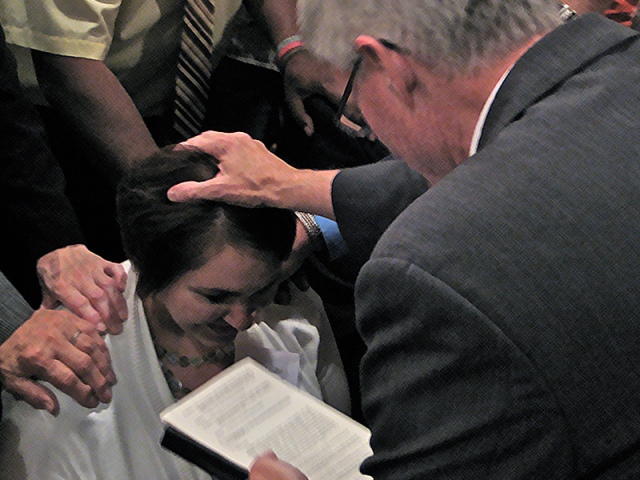
OrdainedThis may seem a bit radical for my fellowship (Assemblies of God), but I would like to go on the record as saying that  ordination ought to be the aim of every pastor and not because of education, credentials, or prestige, but because it offers a testimony of faithfulness (at some level). To be ordained (in my tradition) requires one to be in ministry for a minimum of 2 years and a few extra courses (if one didn’t go through one of our official schools). This is quite minimal. I was ordained at 25 and would have been ordained at 24 except I was short of the two years by a couple of weeks (don’t get me started on that one).
I have a friend who has changed fellowships after much praying and seeking and is in a LONG process of seeking ordination in her new fellowship (Anglican). I’ve spoken with her several times about their process and it is a doozy. But I’m excited for her going through the process and seeking the affirmation that I believe is already hers in her years of faithful ministry up to this point. It will be wonderful when her bishop places his hands on her (do they do that in her tradition? No clue, but let’s pretend anyways) as testimony of her calling and faithfulness to the call.
So why should you seek ordination?

  • Seek ordination as an affirmation of God’s calling on your life.
  • Seek ordination as a call to greater discipleship.
  • Seek ordination as a testimony from those you serve concerning your faithfulness.
  • Seek ordination as a deeper commitment to your fellowship and its continuing maturation.

The problem that I’ve seen is that too many pastors who aren’t ordained in my fellowship look at it like they should never seek it. Like it is only about having to pay more fees (it does require that). Like it may mean more responsibility (it might if you then get elected to a sectional or district position which can only happen by being ordained). That’s just silliness. We should want to be tested and proven in our calling and ministry. We should desire to be the best minister we can be. Ordination does not guarantee this by any stretch, but a good minister should have NO reason to avoid ordination as early as possible. Be faithful where the Lord has placed you and let others affirm this through the process of being ordained! 🙂
_________________
Originally blogged by me at bluechippastors.org on April 27, 2013.

Posted in Ordination, Pastor | Tagged , , , | 8 Comments

A Word to Pastors For Pastors From a Pastor

As I was preparing for teaching the Senior Seminar – Ministerial course this semester I spent some time just reading, praying and meditating on Paul’s brief time with the Ephesian elders on his trip to Jerusalem (Acts 20.18-38). I like to jot down thoughts as they come at me and these are some of the pastoral thoughts I see and hear from the apostle that offer a reminder to me of my responsibility in pastoring and my call to pastors-in-training. While they are not intended as either comprehensive (or even necessarily belonging to the intent of the text from Luke) I believe they offer some bit of wisdom in considering this calling. And so I shared these words with my students last night as preparatory for their final ministerial course and the move toward pastoring.

  • Work with humility for the Lord
  • Offer your broken and costly service
  • Preach the Lord Jesus boldly
  • Be led by the Spirit
  • Endure
  • Be faithful
  • Guard yourselves and the flock committed to you – feeding and shepherding them for good and against false teachers
  • Entrust yourself and the church to God
  • Do not be greedy, but work hard in order to give
  • Give yourself to prayer with (and for) the church
  • Embrace the church as family

I pray that I indeed live up to such a high and holy calling and faithfully fulfill all the Lord has put into my hands to do. May he keep his Church. And may his Church know the fellowship of his sufferings and the joy of his life-giving victory.

Posted in Pastor, pastoral training, Paul | Tagged , , , | Leave a comment

1 Kings: For the Person in the Pew (A Review)

Jim West

Photo courtesy of Joel Watts and Facebook. 🙂


Jim West (ThD; Professor of Biblical Studies at the Quartz Hill School of Theology) has written an easily read commentary on the entirety of the Old Testament of which I have reviewed his commentary on 1 Kings. West has proven himself to be a capable scholar of the ancient Near East, but more importantly of the texts of Scripture and as a preacher of said texts. He has written extensively on Scripture (including this commentary series covering the entirety of the Bible) and is perhaps one of the foremost and most prolific of bibliobloggers today. West shows considerable concern for the average church goer in his writing of this commentary both in the use of language, brevity and pastoral injunctions.
the-person-the-pew-commentary-series
West here offers some of the most concise and on-point comments of any commentary I’ve read on 1 Kings. He writes with the skill of an artisan even as he limits his own comments to a minimum. Where he becomes prosaic is in the quoting of other commentaries (sometimes at length), but even more so in his not to be missed excurses (on such topics as suicide and theodicy) which offer delectables neatly prepared for consumption to those wanting more.
Several of the features which make this volume less helpful would firstly include the choice of translation (the RV) which is all but out of use by the Church and uses unhelpfully antiquated language. While West claims it is perhaps “one of the best ever produced” this offers little consolation to the contemporary reader in the pew who neither is likely to use it or to understand its language (and if they prefer such dated language likely already prefer the KJV).
Several other features which would greatly benefit this series: listing the excurses on the table of contents page, including a bit more detail in the introduction, and indicating the chapter being discussed somewhere on the page. The introduction at least offers a very basic indication of West’s ideas about the text, but could perhaps use some further boiling down of the overall theological themes of 2 Kings. On passage number citations, if one stops reading and then takes it up again it takes some searching to find the correct chapter/passage.
One final lamentable feature of this series: West opts too often to refer to deity as “God” even when the very point being made is to be made by using the divine name YHWH (Yahweh, or even as his translation of choice has it: LORD). This seems to be all to common a mistake (and not a trifling one) in commentaries of all varieties. While this may be missed by many readers “in the pew” it continues to validate notions of the generic sense of “God” rather than specifically the God of Israel, YHWH, who makes and keeps covenant by that name and whom the writers are specific to point to by that name. A point which he seems to understand when he points clearly to Yahweh as God on pages 122-123.
On page 117, West improperly states that there would be no more raising of the dead after Elijah until the time of Jesus. Though he must have written the commentary covering 2 Kings 4 where one encounters Elisha raising the Shunnamite’s son.
Overall, West is to be commended for producing among the most readable commentaries on 1 Kings and thus deserving of a wider readership. His work highlights throughout its pages many key ideas and could likely inspire further reflection upon the text proper. One cannot but help to hear the word of a preacher speaking as a prophet of the LORD and calling the community to faithful obedience in the voice of Jim West’s many comments. May this commentary bear fruit in the Church.

Posted in 1 Kings, Book Review, commentaries, Uncategorized | Tagged , | 5 Comments

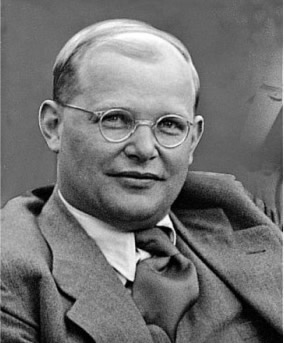
Misreading Bonhoeffer: A Response

Bonhoeffer
I was recently alerted (via Facebook) to an article by Richard Weikart, “The Troubling Truth about Bonhoeffer’s Theology,” Christian Research Journal 35.6 (2012) which can be read HERE.
It seems Weikart initially felt quite happy with Bonhoeffer while he thought him an “Evangelical,” but quickly dismissed him once he came to see him as “Neo-Orthodox” (pp.1-2). What makes this so troubling is that neither category is fitting for this early twentieth century German Lutheran minister theologian, but seem more concerned with categories of Americans intent on dismissing folks by use of labels. That being said, Weikart expresses numerous points at which he finds trouble with Bonhoeffer.
Under the heading of Scripture, Weikart quotes Bonhoeffer’s Ethics, “Scripture belongs essentially to the preaching office, but preaching belongs to the congregation. Scripture must be interpreted and preached. In its essence it is not a book of edification for the congregation.” He then proceeds to argue this is not true to Luther (on the “priesthood of all believers) or Lutherans. But this type of belief about the place of the proclaimed word and its potency is precisely Lutheran. Weikart seems to not realize the place of the preached word in Lutheran theology proper or in the theology of Luther. For Luther (and thus Lutherans in his wake), it is the proclaimed word of God where one hears the voice of Christ. Such is the case with Bonhoeffer.
Where Weikart accuses Bonhoeffer of moving from his earlier reading of Scripture with regularity, he seems oblivious to Bonhoeffer’s opposition to the spiritualizations of the pietistic Lutheran practices with which he had at first been fostered into and only later came to see the pietism often did not result in greater faithfulness, but only a higher sense of spiritualized success all the while avoiding taking responsibility in the life of the world (see his many such comments on this in Ethics). There is in fact nothing wrong with not reading Scripture daily. Jesus didn’t. He couldn’t. What is imperative is that we meditate upon Scripture, hear it and obey it. The Scriptures nowhere demand daily Bible reading. That is a matter of pietistic Evangelicalism that has learned to think such a practice is a requirement of genuine spirituality. Bonhoeffer seems to have understood this at deeply sustained levels.
While many (in the U.S.) regard Barth as “neo-orthodox” this is not owing to Barth himself, but to early American interpreters of Barth who either failed to understand him or misrepresented him. It is easier to just lump him in with others who are also rejected without wrestling with what he has actually written.
Under his attack on Bonhoeffer’s (and Barth’s) view of Scripture, Weikart misses that the Scriptures are recorded not as transcripts, but as careful theological reflections of the revelation of God concerning the stories of Israel, Jesus, the Church and the world. The Scriptures are not attempting to document empirically verifiable history, but instead that which must be believed by faith which is offered sufficient witness to believe. Weikart’s view seems to be more intent on historicality (even when the text itself does not warrant it, nor the preservation of the text) rather than the realities to which the text points in the manner in which the writers were inspired to record them.
Further, what Bonhoeffer rejects of the emphasis upon trying to speak of the “historical” with regard to Jesus is that 19th-20th century German obsession with doing just that. This led to a number of notions such as a bifurcation of the Jesus between that of history and that of faith, or worse yet, an eradication of the historical Jesus altogether. Bonhoeffer was responding in just that sort of milieu. And he responded by pointing to faith in the preserved stories of Jesus regardless of the ability to historically verify details beyond the witnesses of the texts themselves.
Weikart’s use of Bonhoeffer’s Letters and Papers from Prison shows an utter disregard for the writings of one in a personal letter to another that was NOT intended for public consumption. If any of us had things we said privately preserved by others after our death and disseminated globally we would find ourselves having stated things which we were wrestling with and/or were not offered with the context of explanation (because it is assumed the person spoken to knows this sufficiently to understand). Judgment of all of us would ensue.
Under the title “The Good Book,” Weikart fails to grasp Bonhoeffer’s rejection of Scripture as offering “universal, timeless truths”. Bonhoeffer is convinced that to treat Scripture as offering such, is to pre-determine what God would have us to do in any and every situation. But this (for Bonhoeffer and for myself) ignores the living word of the living God who speaks today through that word to us. It makes a binding law of the word of Jesus. It means one is no longer required to attune their ears to the Spirit, but only to reread words written. It is on this very idea, that I have personally found life and joy in Christ and proclaim that we are not through listening as if we have heard all there is to hear…NO! We must go on listening anew today!
On Weikart’s claim of universalism, he fails to engage the very “this-worldly” notion of redemption at work in Scripture and the theology of Bonhoeffer. Instead, he seems to think more of spiritualized heavenly individualistic salvation. Bonhoeffer, however, was concerned with the redemption of the cosmos that was enacted in Christ Jesus. Bonhoeffer was concerned with “people” and not simply individuals and he was concerned with this precisely because of the election of Jesus wherein all of humanity finds redemption. This is not to say all are saved, but to say that in Christ salvation is sufficient for all and is extended to all and must be declared to all. The pastoral and missiological implications of this are profound.
I for one find little to judge negatively of Bonhoeffer’s reflections stated by Weikart, but maybe, just maybe, I’ve become one of Weikart’s “liberal” “neo-orthodox” folks he seems so adamant are to be despised and rejected. Or maybe Weikart is simply judging Bonhoeffer by means of his own skewed theological and ideological agenda rather than on grounds of truthful discourse that hears Bonhoeffer in Bonhoeffer’s own context. To those who have ears to hear…
___________________
My apologies for not citing Bonhoeffer’s works throughout. This is more of an overall response (without direct access to Bonhoeffer’s works from my home). For those interested in reading Bonhoeffer in context, they can read the pages cited by Weikart as well as reflecting particularly on Bonhoeffer’s Ethics which answers (for myself) the misreading of Bonhoeffer contra much of American Evangelicalism and its inherited pieties.

Posted in Dietrich Bonhoeffer, Uncategorized | Tagged , , , , , , , , | 3 Comments